


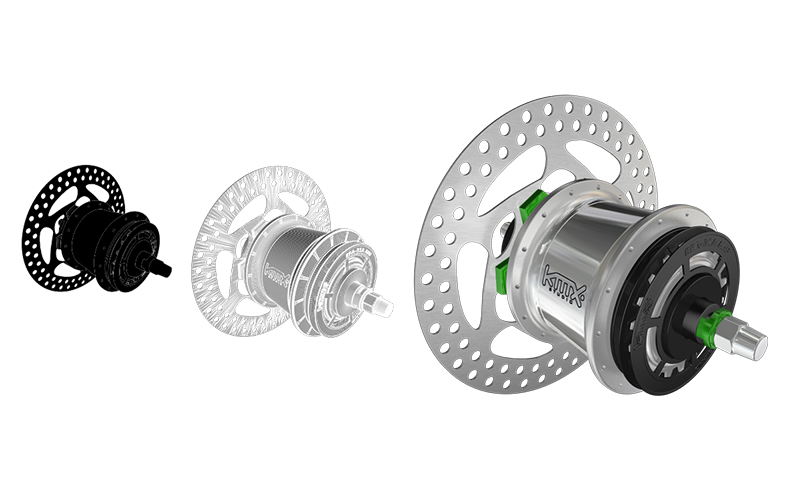
Despite the fact that photography has developped incredibly throughout the years and there are little limits to it, there still are some…
As far as photography can be advantageous over visualisation in some fields, computer generated images prove to be a more efficient solution in others.
For example for some products, photography is easiest, fastest and least expensive solution.
Even in such cases though, it requires an experienced photographer and equipment in order to attain a reasonable level of professionalism. Very often it also requires quite some retouching to fit the standards of marketing materials.
There are cases in which taking a photograph becomes difficult, if not impossible, and creating a product visualisation comes in handy.
I chose to focus on 4 main aspects that are difficult or impossible to reach for traditional photography, and that are fully attainable for visualisation:
- MICRO DIMENSION – tiny objects that are difficult to work with in a detailed way
- MACRO DIMENSION – objects too big to be working with comfortably
- SEE-THROUGH DIMENSION – objects that need to be cut trough to show their functionality
- UNREAL DIMENSION – objects that are difficult to capture as they simply do not exist
The main advantage of a 3D product render is that it is created from scratch together with the whole reality surrounding it. Limitations that confine a photo camera, f.ex. physics, can be freely set up in such a way to fit the author’s idea about the final image.
Even if your product doesn’t operate in any of the above dimensions you may still find computer generated visualisation a more comfortable solution.
Provided you don’t employ a photographer and have a studio for your own, you will simply find working with 3D renders much more time-efficient. True, taking a photo takes seconds but there are lots of things that need to be arranged for this to happen.
With visualisation the whole process can be pulled off by means of several mails or phone calls.